Eduardo’s Story: From ECMO to Graduation
Discover Eduardo’s journey back to being a teenager, highlighting the power of teamwork, innovation and resilience.

June 17, 2026
Teamwork and Heart: Inside Eduardo's ECMO Recovery
At 18 years old, Eduardo was a high school senior with his eyes set on graduation and his love of soccer. But in February 2026, everything changed.
What started as a mild illness quickly escalated into something far more serious. By the time Eduardo arrived at Children's Nebraska, he was battling a severe case of influenza and pneumonia, and it was clear that extracorporeal membrane oxygenation (ECMO) – an advanced form of life support – would be the best path forward.
"Within the first couple of hours that Eduardo was at Children's Nebraska, he needed to be placed on a ventilator," said Michael Facciolo, MD, a pediatric intensivist at Children's Nebraska. "Since he needed more support from the ventilator and additional oxygen, we made the decision to put him on ECMO."
For the next 65 days, Eduardo would be in one of the hardest fights of his young life. And every step of the way, an extraordinary team of doctors, nurses, therapists, specialists and his loving family fought right alongside him.
What Is ECMO?
ECMO is a form of life support that temporarily takes over the function of the heart and lungs. It provides oxygen to the blood while removing carbon dioxide when a patient's organs cannot function on their own. The purpose of ECMO is to keep the body supported while it heals.
Only the most critically ill patients require ECMO. According to the American Lung Association, it’s most often used when other treatments haven’t improved heart or lung function, but recovery is still possible. Children may need ECMO for a range of reasons, including:
Post-cardiac surgery
Heart defects
Sepsis or severe infection
Respiratory distress
Viral lung conditions like pneumonia
For Eduardo, ECMO became his lifeline.
Are There Different Types of ECMO?
There are two main types of ECMO:
Venovenous ECMO (VV): Supports your child’s lungs only, while their heart continues to function on its own.
Venoarterial ECMO (VA): Supports your child’s lungs and heart, providing them with a rest.
From Critical Care to Fresh Air: An ECMO Milestone
Sixty-five days on ECMO is a long time for anyone. For an 18-year-old who loves soccer and being outdoors, it can feel even longer. Despite the complexity of Eduardo's critical condition, his team found a way to take him outside — not just to feel the warmth of the sun, but so he could meet Oreo, his new dog and emotional support companion that was gifted to him by his family.
Sixty-five days of ECMO. Thirty minutes of time outside. Months of work. One unforgettable moment.
Mobilization on ECMO
Mobilizing a patient on ECMO is extraordinarily rare. It requires meticulous planning, specialized equipment and a coordinated team effort. For one outing, it takes many specialists to ensure the safety of the patient for every second of the transfer. These specialists include:
"It takes a lot of planning and collaboration," said April Everett, RN, an ECMO specialist at Children’s Nebraska. "We had to coordinate oxygen tanks, battery backups and medications to make sure everything was ready for the 30 minutes we spent outside."
How Long Can a Child Stay On Life Support (ECMO)?
Every child's ECMO journey is different, and the length of time they will remain on ECMO depends on their condition. Some patients need ECMO for only a few days, while others with severe lung or heart conditions may require several weeks or even months. The duration depends on:
The underlying illness or injury
How quickly the heart or lungs recover
The patient's overall health
Whether complications occur during treatment
Along the way, milestones that may seem small can become powerful signs of progress:
Sitting up
Spending time outdoors
Seeing a beloved pet
Milestones That Matter: Graduation and Soccer
From the beginning, Eduardo's care team understood something important: recovery isn't just physical. It's personal.
Eduardo’s family, including his extended relatives, made sure he felt loved and supported with numerous visits and FaceTime calls. His parents also remained close by his side throughout his healing journey. In return, Eduardo’s care team made sure his family felt heard, understood and supported in partnership with Children's Nebraska's Spanish-speaking interpreters.
With his family’s love and support, Eduardo had two goals:
Walk across the stage at his high school graduation to make his family proud
Play soccer again
His care team built his recovery around those dreams.
Achieving Goals Together
ECMO requires a team approach. The care team at Children’s Nebraska not only worked together to ensure Eduardo could reach his goals, but they worked with Eduardo to build his recovery around his own personal ambitions. With the help of his physical therapists, Eduardo practiced:
Walking the length of a stage during therapy sessions
Walking through the Pediatric Intensive Care Unit (PICU) kicking a soccer ball (with the support and cheers of his team and family members)
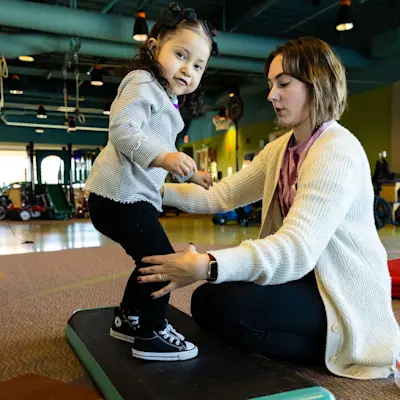
"Our goal is to help these kids be kids, even in the hospital," said Jessica Luth, a physical therapist at Children's Nebraska. "For Eduardo, that means working on standing endurance, walking and playing soccer. Taking him outside was a huge motivator — not just physically, but mentally."
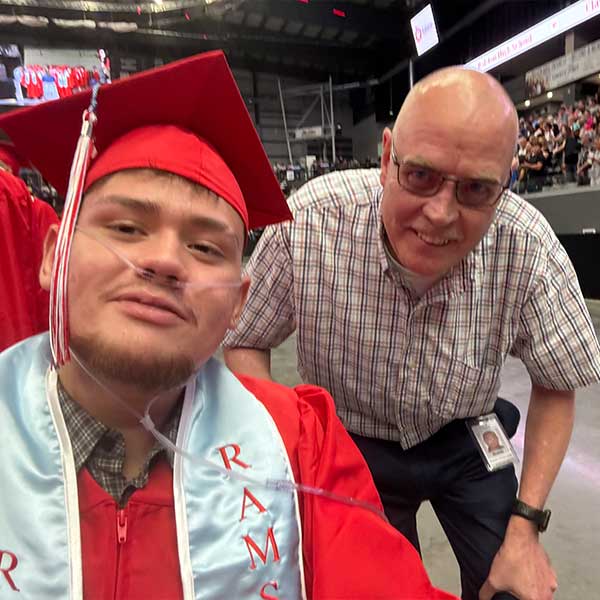
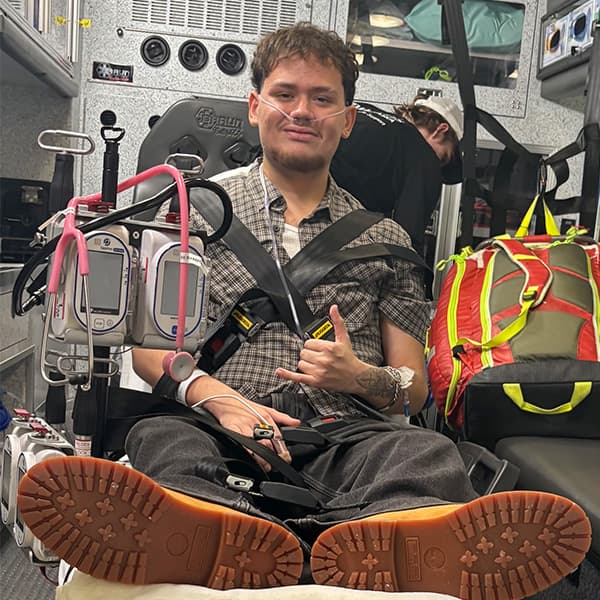
When his graduation day arrived, Eduardo was there. Still requiring oxygen, he made it to the ceremony with the support of Children's Nebraska's Critical Care Transport team, equipped with a mobile intensive care unit (ICU). He crossed that stage with pride and determination.
ECMO Care Team at Children’s Nebraska
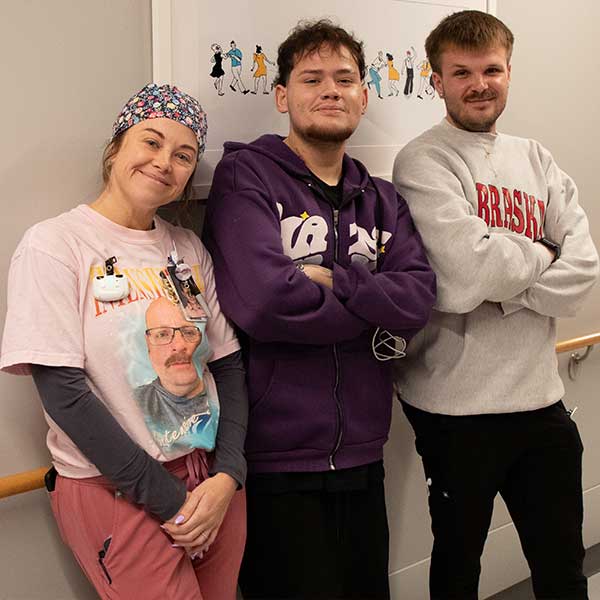
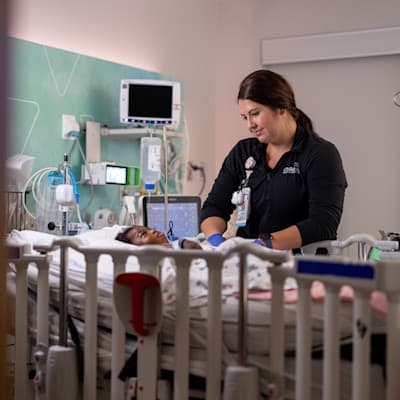
Eduardo's story represents the power of collaboration in pediatrics and care of every physician, nurse, therapist, specialist and interpreter who showed up for him and his family, day after day. This kind of coordinated care is a result of training, trust and an unwavering commitment to the children and families Children’s Nebraska serves.
Those moments — the sunshine, the dog, the soccer ball, the graduation stage — were made possible because an entire team believed in a better life for Eduardo.
An ECMO Program Built for Excellence
Children's Nebraska is a two-time recipient of the Excellence in Extracorporeal Life Support at the platinum level. Extracorporeal Life Support Organization (ELSO) Award for Excellence in Life Support at the Platinum Level. This is ELSO’s highest honor. The designation recognizes ECMO programs worldwide that demonstrate exceptional performance, innovation and quality. It signals to patients and families a genuine commitment to the highest standards of care.
The award covers the full spectrum of Children's ECMO team including:
ECMO specialists
Intensive care physicians
Surgeons
Perfusionist
Nurses in both the Cardiac Care Unit and Pediatric Intensive Care Unit.
ELSO’s Award for Excellence in Life Support is a platinum designation of excellence lasting three years and reflects:
Advanced clinical skill
Specialized equipment
Defined patient protocols
Ongoing education for every team member
Explore More

Cardiology

Transport (Critical Care)
Pediatric Intensive Care Unit (PICU)