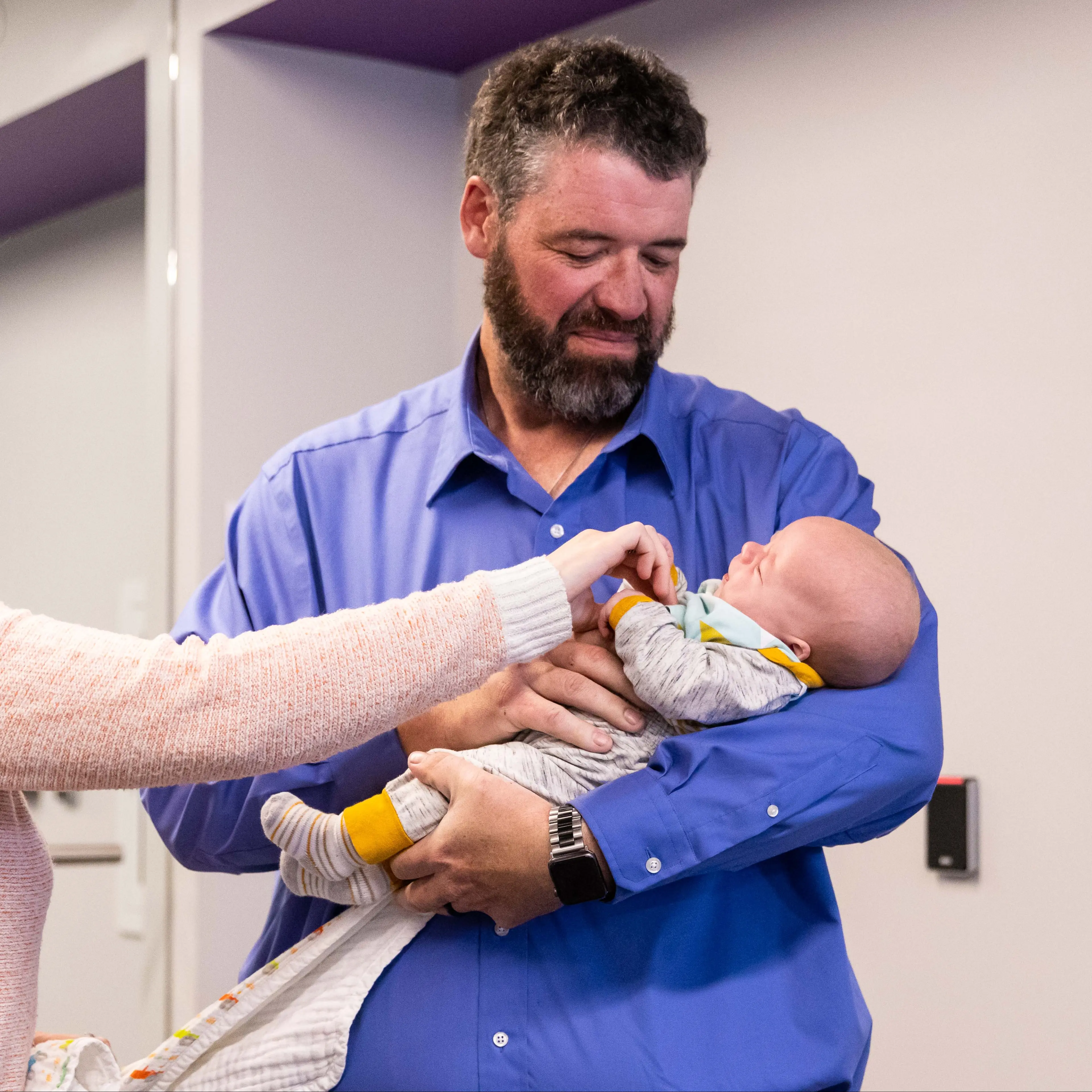
Rylee’s Story: New Heart Tech for HCM
Learn how the team at Children’s Criss Heart Center used an innovative treatment for Rylee’s hypertrophic cardiomyopathy (HCM).
May 1, 2026
An Innovative Solution for Hypertrophic Cardiomyopathy
After being diagnosed with a heart condition called hypertrophic cardiomyopathy (HCM), providers told Rylee’s family she would likely need a heart transplant. A second opinion by the cardiology experts at Children’s Nebraska changed everything.
The Dr. C.C. and Mabel L. Criss Heart Center was just the fourth pediatric heart center in the country to offer extravascular implantable cardioverter defibrillators (EV-ICDs) — a groundbreaking and innovative technology that can help prevent the need for heart transplantation for certain patients at risk for sudden cardiac arrest.
Thrilled to have this option, 17-year-old Rylee underwent this less-invasive surgery in the cardiac catheterization lab in August 2025, followed by recovery in Children’s Cardiac Care Unit (CCU). Today, Rylee is back at school, thriving and focused on living her best life as a teenager instead of worrying about her heart condition thanks to the peace of mind the device offers.
Rylee’s story is a testament to the expertise and dedication of the team at Children’s Criss Heart Center.
What Is Hypertrophic Cardiomyopathy?
Hypertrophic cardiomyopathy (HCM) is a heart condition in which the heart muscle becomes thicker and stiffer. HCM occurs when the thickened heart muscle leads to heart issues. HCM can make it more difficult for the heart to pump blood and can increase the risk of abnormal heart rhythms. Children, teens and adults who have a heart condition like HCM require specialized heart care and long-term monitoring.
HCM is genetic. According to the American Heart Association, if a parent has HCM, their children have a 50% chance of also having it. Rylee’s late mother was diagnosed with HCM as a teenager. So when Rylee was in the seventh grade and began experiencing light-headedness while playing basketball, her family suspected HCM and the diagnosis was quick.
What Are HCM Symptoms in Children?
Many people who have HCM don’t experience symptoms. But if a child is experiencing abnormal heart rhythms or heart failure because of HCM, symptoms may include:
Chest pains
Fainting
Fatigue
Feeling lightheaded or dizzy
Palpitations (feeling like the heart is fluttering, racing or skipping a heartbeat)
Shortness of breath
In newborns and babies, symptoms may include difficulty eating, excessive sweating and trouble gaining weight.
What Are the Latest Treatments for Hypertrophic Cardiomyopathy?
The latest treatments for HCM include advanced imaging and personalized medication plans. New, targeted medications are designed to improve heart function and septal reduction therapies (SRT) which are surgical procedures that help relieve HCM symptoms by reducing the amount of thickened heart muscle. Providers work with families to create a personalized treatment plan that factors in the child’s symptoms, risk level and whether or not HCM is restricting blood flow.
Rylee had hemodynamic testing done at Children’s cardiac catheterization laboratory. This type of testing helped our care team better understand how HCM was impacting Rylee’s heart. The results showed that a heart transplant wasn’t needed at this time, allowing the team to explore other options. Through a collaborative effort, the interventional cardiology and heart failure teams reassessed her condition and enrolled her in a clinical medication trial, while Matthew W. Sorensen, MD, a pediatric electrophysiologist at Children’s, determined that an EV-ICD would provide an added layer of protection. Together, this comprehensive, team-based approach helped stabilize Rylee’s condition and delay the need for a transplant — highlighting the strength of Children’s Heart Center in delivering coordinated, innovative care.
What Is an EV-ICD?
An EV-ICD is an innovative, surgically implanted device that sits on top of the heart and constantly monitors heart rhythms. If it detects an arrhythmia, the device delivers pulses within seconds to help the heart return to a healthy rhythm. If needed, it can deliver a shock, which can save a child’s life. The EV-ICD is an upgraded version of a similar device Rylee’s mom had for many decades.
EV-ICD is a great option for children and teens because, as opposed to traditional surgery, it does not affect the heart’s blood vessels — helping minimize the risk of scarring and its complications as they grow. EV-ICD provides a safer, less invasive approach for young patients.
When Should My Child See a Cardiologist for HCM?
Your child should see a cardiologist for HCM if they are experiencing signs or symptoms of HCM or if they’re at risk for developing the disease. Your child may be more at risk for HCM if:
A parent has HCM
A parent or sibling has had testing that shows a genetic change for HCM
A family member has had a cardiac event or heart murmur
A family member has had an abnormal EKG (electrocardiogram), which evaluates heartbeats
A family member has been told they have “athlete’s heart” or an enlargement of the heart
Four years ago, aware of her mom’s health history, Rylee didn’t hesitate to tell her family she was experiencing lightheadedness on the basketball court. Thanks to her openness and Children’s dedication to leading-edge technologies, Rylee was one of our first patients to receive an EV-ICD. She is a trailblazer for many children and teens like her, benefiting from innovative care that helps manage serious heart conditions and support long-term health.
Expert, Innovative HCM Care
Children’s Criss Heart Center, now an HCMA Center of Excellence, uses the latest research and technology to ensure the most up-to-date care for children and teens with HCM and other forms of complex cardiac conditions. If there is a family history of HCM or heart conditions, or your child is experiencing HCM symptoms, contact our Cardiology team at 402.955.4350.
Explore More

Refer a Patient
Merritt’s Story: Heart Patient Meets Pro Volleyball Player
Victoria’s Story: Heart Transplant Gives Family Fresh Hope